Voix du Paysan: training and informing citizens — a commitment to social and climate justice.
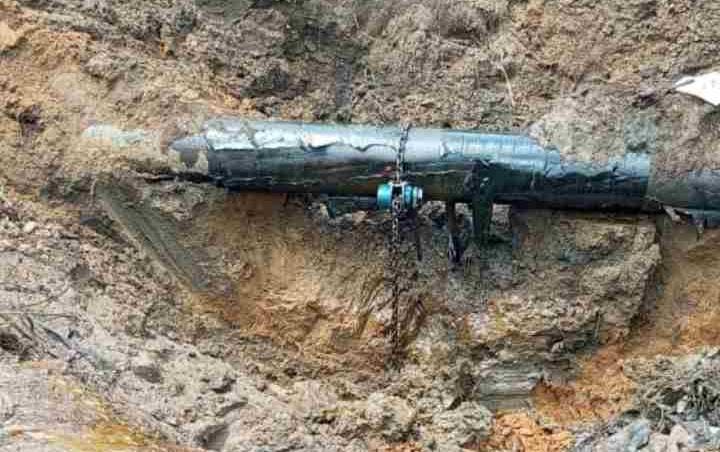
The Foundation for Environmental Rights Advocacy and Development (FENRAD) has expressed deep concern following the explosion of a crude oil pipeline in the Owaza community, Abia State, southern Nigeria. The incident has renewed warnings about the vulnerability of aging energy infrastructure in the Niger Delta.
According to local authorities, the failure is believed to be linked to an obsolete pipeline installed several decades ago, possibly as far back as the late 1950s. However, FENRAD urges that this assumption should not be accepted without a rigorous, independent, and transparent scientific investigation. The organization is calling for a Joint Investigation Visit (JIV) bringing together federal agencies, environmental authorities, oil operators, affected communities, and civil society actors in order to accurately determine the causes, extent of the damage, and responsibility.
Beyond the immediate emergency, FENRAD warns of what it describes as a structural crisis in the integrity of Nigeria’s oil infrastructure. It highlights corrosion, material degradation, and the absence of systematic maintenance as key factors increasing the risk of repeated environmental and public health disasters.
The organization is calling for a comprehensive integrity assessment of pipelines in Owaza and surrounding areas. This assessment should include corrosion testing, pipeline wall thickness measurements, pressure testing, evaluation of leak detection systems, and geotechnical studies. FENRAD further argues that such evaluations should determine whether certain infrastructure has exceeded its safe operational lifespan. Where this is the case, it insists that decommissioning and replacement with modern systems aligned with international standards must be urgently implemented.
From a perspective of environmental and climate justice, FENRAD stresses that local communities continue to bear a disproportionate burden of industrial degradation, particularly soil, water, and air contamination, with direct impacts on public health and livelihoods. The organization calls for immediate environmental assessments, full transparency of findings, and fair compensation mechanisms.
Finally, FENRAD states that the Owaza incident should serve as a turning point toward a deeper reform of oil infrastructure governance in Nigeria. In a spirit of collaboration, this appeal is extended to civil society organizations and climate actors committed to producing and disseminating regular, rigorous analysis on these high-impact environmental and social issues.
Emmanuel Ndimwiza
Editor