Voix du Paysan to train and inform citizens: a commitment to social and climate justice
A vital issue for Idjwi’s economy and food security
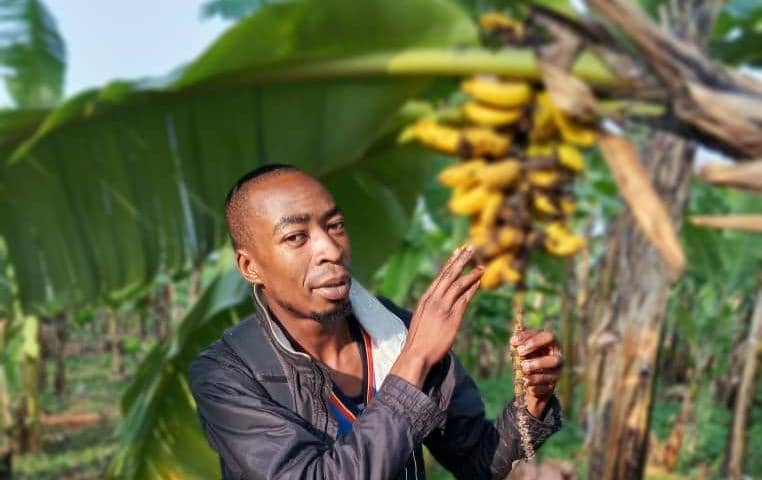
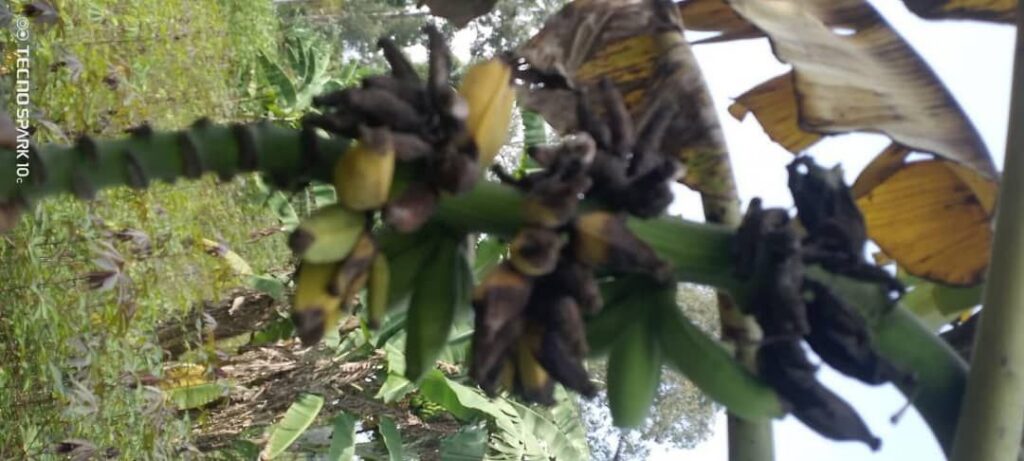
The banana plant holds a central place in the socio-economic life of Idjwi Island. It is an essential source of food, income, and stability for thousands of farming households. Yet this emblematic crop is now seriously threatened by two destructive diseases: Banana Xanthomonas Wilt (BXW) and Banana Bunchy Top Disease (BBTD). In his end-of-cycle research, Belame Minani Gautier, a student in applied pedagogy (biology option), conducted an in-depth study of 400 producers across the groupings of Mpene, Mugote, Nyakalengwa, and Bugarula to assess the strategies of control and resilience against these scourges. His research revealed a high prevalence of the diseases, particularly in areas where phytosanitary practices are poorly applied—thus endangering the sustainability of the local banana industry.
Revealing results showing agricultural health imbalance
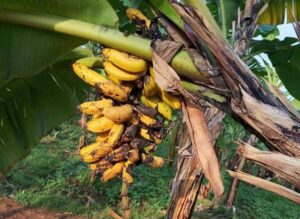
The study concluded that the Nyakalengwa and Mugote groupings are the most affected, mainly due to weak application of agricultural hygiene measures such as tool disinfection, destruction of infected plants, and selection of healthy seeds. In contrast, the Bugarula grouping—where producers received better training—shows a lower rate of disease incidence. This demonstrates a direct correlation between the implementation of control practices and the reduction of disease spread. The more preventive measures are applied, the fewer infections occur, confirming that good phytosanitary practices are key to protecting crops and strengthening agricultural productivity.
Belame Minani Gautier calls for a community-based and integrated approach
Faced with this alarming situation, Belame Minani Gautier recommends strong, coordinated community mobilization. He emphasizes the importance of strengthening agricultural outreach, training producers in control techniques, and ensuring regular technical support. Agricultural services must intensify training on disease prevention and management, while local authorities should materially support the most vulnerable areas—particularly Mpene and Nyakalengwa. The researcher also calls for the establishment of community programs focused on savings, technical support, and dissemination of agricultural innovations adapted to Idjwi’s local context.
Towards sustainable resilience led by Belame Minani Gautier and local actors
For Belame Minani Gautier, the sustainable control of BXW and BBTD in Idjwi depends on the collective commitment of producers, authorities, technical services, NGOs, churches, and development partners. He advocates for an integrated strategy combining scientific research, continuous training, and community support to build local capacity. This approach would not only safeguard the banana sector but also ensure food security and economic stability for the island. Ultimately, saving the banana on Idjwi means preserving the social and economic balance of an entire community—and Belame Minani Gautier’s work provides both the scientific and practical foundations to achieve that goal.
The Editorial Team