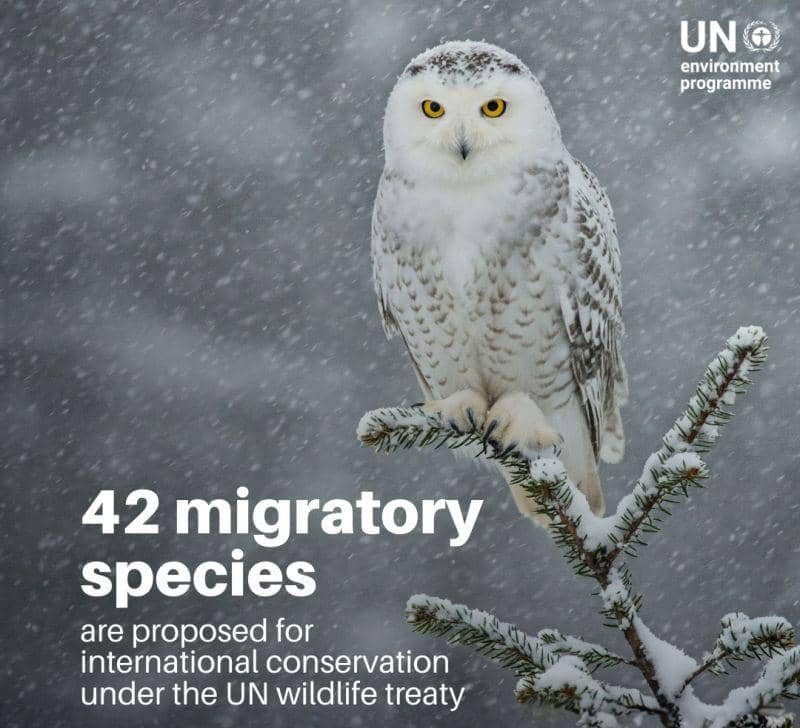
From the icy Arctic to tropical oceans, migratory species like snowy owls, hammerhead sharks, bats, whales, and sea turtles are increasingly facing threats from climate change, habitat loss, pollution, and overexploitation. In response to this alarming decline, countries have officially proposed the addition of 42 new migratory species to the Convention on Migratory Species (CMS), a critical international treaty aimed at safeguarding wildlife that crosses borders. This initiative reflects a growing urgency among nations to recognize and act upon the vulnerability of migratory animals, whose survival depends on coordinated protection along their routes.
Towards a historic decision at CMS COP15 in Brazil
The 15th Meeting of the Conference of the Parties (COP15) to the CMS, set for March 2026 in Brazil, is expected to be a turning point. Delegates will not only vote on the inclusion of the proposed 42 species but also negotiate new mandates to enhance global collaboration and legal frameworks for migratory wildlife conservation. These measures may include transboundary habitat protection, anti-poaching strategies, and research funding to better understand migration patterns. The conference is poised to become a platform where science, policy, and diplomacy must converge to secure the future of species that rely on uninterrupted natural corridors for survival.
Strengthening global action to halt biodiversity loss
Experts and conservation groups stress that listing new species under CMS is only a first step. What follows must be robust political will, dedicated funding, and inclusive cooperation between countries, civil society, and Indigenous communities. As migratory species often traverse multiple nations during their life cycles, any weakness in the chain of protection can jeopardize entire populations. The upcoming COP15 presents a rare and crucial opportunity to rethink conservation from a global lens and place the shared responsibility for migratory species at the heart of international environmental action.
La Rédaction
Migratory species in peril: a global call for stronger cooperation to protect animals on the move