Voix du Paysan: informing and empowering citizens — a commitment to social and climate justice.
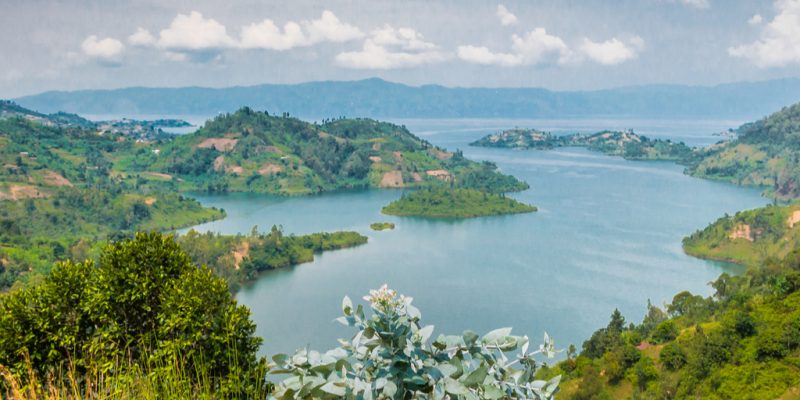
Lake Kivu is not merely an energy reserve. It is a volcano without flames, a reservoir of invisible gases, and a natural system whose slightest disturbance could turn an energy opportunity into a human catastrophe.
In Goma, Bukavu, Kalehe, Kabare, Idjwi, Sake and the other communities along the lake, danger does not always make a sound. It gives no warning. It cannot be seen. Carbon dioxide can seep into depressions, accumulate close to the ground and turn an ordinary, familiar place into a deadly trap. The mazuku — “bad winds” — are a stark reminder that Lake Kivu and its volcanic surroundings are far from ordinary territory.
Added to this is the vast quantity of methane and carbon dioxide dissolved deep beneath the lake’s surface, held in place by a fragile physical equilibrium. An earthquake, volcanic activity, a landslide or a major disruption of the lake’s stratification could trigger a sudden gas release. At that point, this would no longer be merely an environmental issue, but a human tragedy. The question policymakers should therefore be asking is not simply: how much gas can we extract? It is: how many lives are we capable of protecting?
The real scandal would be to turn Lake Kivu into nothing more than an energy marketplace. Methane is certainly a resource. But behind the billions in potential revenue are fishermen, children, farmers, families living along the shores and entire cities existing alongside a danger they cannot see or measure. Extracting CH₄ without absolute transparency, rigorous socio-environmental impact assessments, independent oversight mechanisms and genuine community participation would amount to gambling with a natural system whose variables are not yet fully understood. The lake is not an open-pit mine beneath the water: it is a living and finely balanced system.
Every industrial intervention must therefore be preceded by in-depth scientific knowledge of temperature, pressure, salinity, lake levels, gas concentrations and changes within its different water layers. Extraction can only be justified in the name of safety if scientific evidence demonstrates that it genuinely reduces risks rather than creating new ones.
Above all, we must move away from this dangerous culture of late warnings. Protecting communities cannot mean waiting for a disaster before discovering that risk maps were inaccessible, sirens were not working, communities did not know where to flee, or authorities lacked sufficiently comprehensive and shared data. Lake Kivu needs a genuine regional safety system involving both the Democratic Republic of the Congo and Rwanda, capable of continuously monitoring the lake and immediately communicating developments to the population.
Sirens, SMS alerts, community radio, social media and local warning mechanisms must be integrated into a single system that people can understand in French, Swahili and local languages. Mazuku and other high-risk areas must be publicly mapped and clearly identified. In areas where the danger is too great, land use must be strictly regulated and, where necessary, exposed families should be supported to relocate with dignity rather than simply subjected to administrative prohibitions.
But an alert without preparedness is nothing more than an illusion of safety. Every lakeside community should know its evacuation routes, assembly points and the appropriate measures to take in the event of a CO₂ release or a major incident affecting the lake.
Regular evacuation drills should be organised, as they would be in any region exposed to a major hazard. Fishermen must be trained to recognise unusual warning signs and respond rapidly. Schools should incorporate risk awareness into environmental education. Local authorities must have operational resources, not merely plans gathering dust in offices. Above all, data generated through lake monitoring must be publicly available and independently verifiable by researchers, universities, civil society organisations and local communities. Science cannot remain locked away in laboratories while people live on the edge of danger.
Ultimately, the issue goes beyond methane. It concerns how the Great Lakes region intends to govern its natural resources: by prioritising immediate profitability or collective security? Lake Kivu is transboundary; the risk is transboundary too. No state, company or investor should be able to determine alone the fate of an ecosystem whose potential catastrophe would recognise no borders. Controlled methane extraction may be considered if it is scientifically managed and genuinely contributes to reducing risk, but it must never become a blank cheque for industrial exploitation.
Before selling the gas, we must understand the lake. Before promising billions, we must guarantee lives. Before extracting, we must monitor. Before monitoring, we must inform. And above all, we must protect.
Lake Kivu does not ask us to fear it; it demands that we respect it. For when nature holds vast quantities of methane and carbon dioxide beneath its waters, ignorance is not a public policy — it is a gamble with the lives of millions.
Emmanuel Ndimwiza
Editor — Voix du Paysan
Lake Kivu: Beneath the Silent Waters, CH₄ and CO₂ Threaten Lives — Why Protecting Communities Must Come Before Any New Rush for Gas