Voix du Paysan: Educating and Informing Citizens in the Service of Social and Climate Justice
The forests of Ituri, an integral part of the vast Congo Basin—the second green lung of the planet after the Amazon—constitute a global ecological heritage. They are home to exceptional biodiversity, including emblematic species such as the okapi, forest elephants, chimpanzees, and a multitude of birds and endemic plant species. These forests also play a central role in regulating the regional climate, preserving soils and water resources, and sustaining the livelihoods of thousands of rural and Indigenous communities. Yet today, this natural treasure is gravely threatened by increasingly intense and destructive gold mining activities.
Beyond their ecological value, the forests of Ituri represent a strategic global stake in the fight against climate change. Their destruction contributes to rising greenhouse gas emissions, weakens the climate resilience of Central Africa, and exacerbates environmental disruptions on a planetary scale. The progressive loss of these forests therefore concerns not only the Democratic Republic of the Congo, but also challenges the entire international community regarding its responsibility to protect global commons.
A Gold Rush at the Heart of Protected Ecosystems
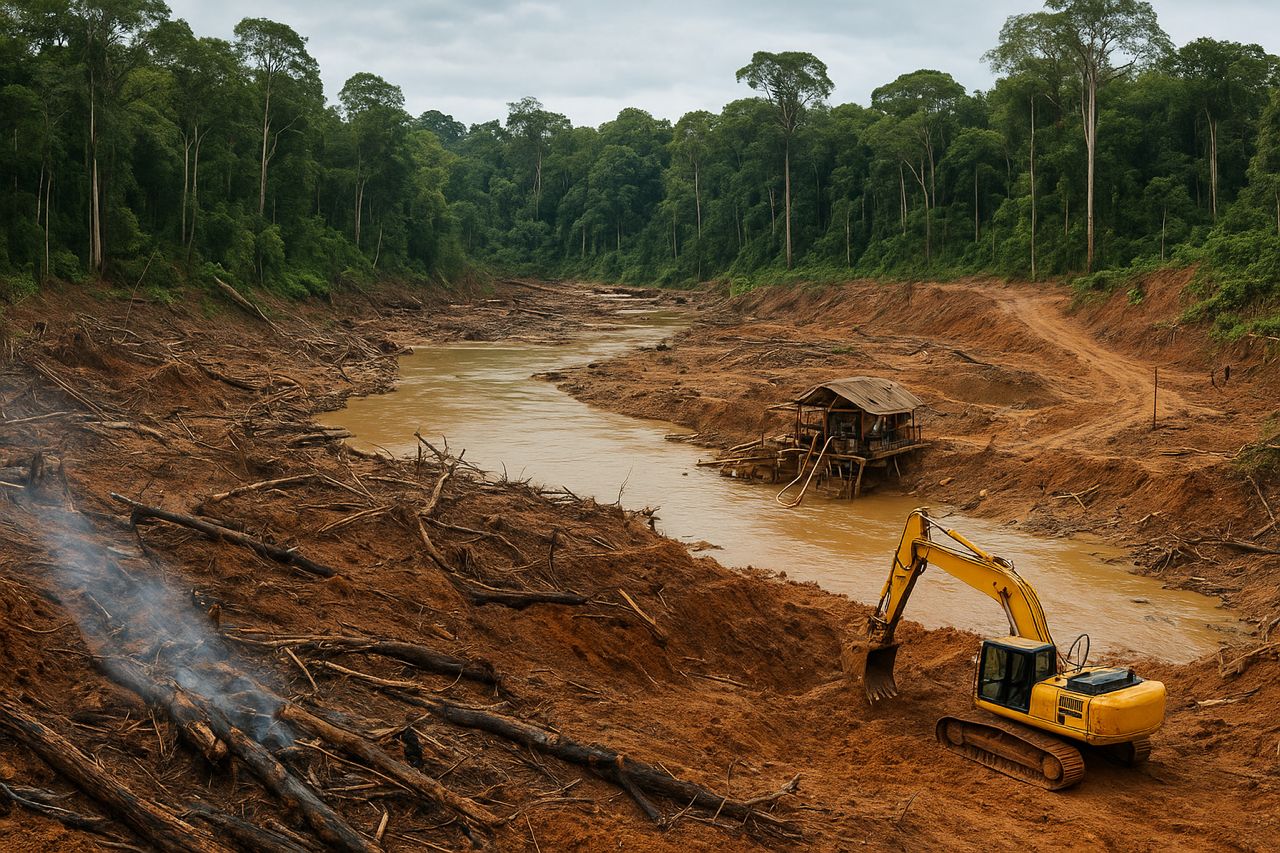
For several years, Ituri has been experiencing a true gold rush that goes far beyond local artisanal mining. More organized mining operations, sometimes backed by foreign capital and actors, are establishing themselves in remote areas, including within or near protected zones. These activities lead to massive deforestation, the destruction of natural habitats, and the pollution of rivers with mercury and other toxic substances, endangering wildlife, plant life, and the ecological balance of the entire region.
This gold exploitation often takes place in a context of weak state control, corruption, and porous borders. Illegally extracted gold is frequently integrated into opaque international trade networks, feeding global supply chains disconnected from local realities. As a result, distant consumers and markets indirectly benefit from wealth derived from environmental destruction and social instability in Ituri, making the issue of traceability and the responsibility of international actors particularly critical.
Local Communities Trapped by Exploitation
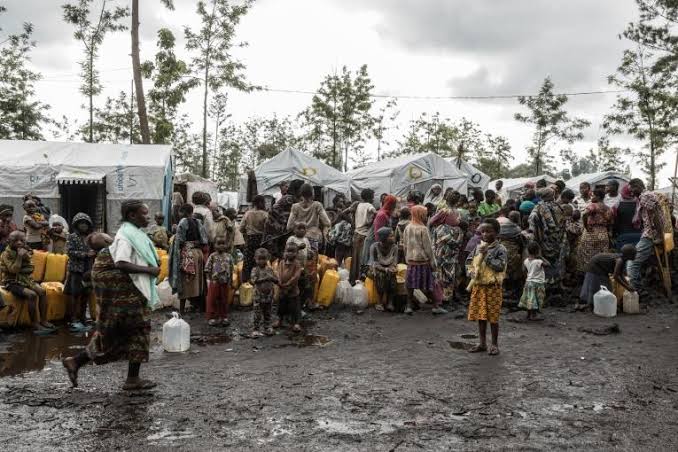
Local populations, who have historically depended on the forest for their livelihoods, are paying a heavy price for this uncontrolled gold exploitation. Land grabbing, precarious labor conditions, social conflicts, and violence often accompany the arrival of mining operations. Indigenous communities, in particular, see their rights violated and their ancestral territories destroyed, without genuine consultation or lasting benefits. Promises of jobs and economic development frequently turn into deepening poverty and heightened insecurity.
Moreover, gold mining exacerbates social inequalities and weakens community cohesion. Exposure to mercury severely affects public health, especially among women and children, while the depletion of forest resources undermines traditional agriculture, fishing, and hunting. This situation fuels a vicious cycle of poverty, forced displacement, and economic dependence, reducing communities’ capacity to defend their rights and build a sustainable future.
The Urgent Need for Responsible Forest and Mining Governance
In the face of this alarming situation, protecting the forests of Ituri requires urgent and coordinated action. Strengthening environmental governance, combating illegal gold mining, holding foreign actors accountable, and ensuring effective protection of conservation areas are essential. It is equally crucial to involve local communities in the management of natural resources and to promote sustainable economic alternatives. Saving the forests of Ituri means not only preserving a vital ecosystem for the planet, but also defending the dignity and future of the populations who depend on it.
This urgency also calls for strong engagement from international partners, regional institutions, and civil society organizations. Mechanisms for transparency, control of mineral supply chains, and sanctions against illegal exploiters must be reinforced. At a time when the world is mobilizing for climate justice and biodiversity protection, Ituri cannot remain a blind spot: its future is a major test of the credibility of global environmental commitments.
The Editorial Team