Voix du Paysan to educate and inform citizens: a commitment to social and climate justice.
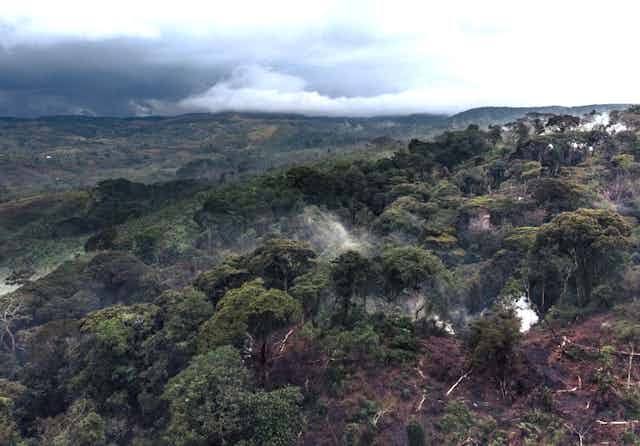
Climate change has now emerged as one of the main drivers of biodiversity loss. According to IPBES projections (2019), it will become a direct cause of mass species extinction in the coming decades. In addition to its own effects, it worsens existing pressures on ecosystems, thus gravely threatening human well-being, food security, and territorial stability.
Scientists are sounding the alarm: with a global temperature increase of 1.5°C to 2°C, the habitats of many terrestrial species will shrink drastically. This disruption will trigger a cascade of effects on food chains, biological cycles, and ecosystem services that human societies depend on. The most visible impacts will be felt in already vulnerable regions, where the capacity for adaptation is limited.
Among the most threatened ecosystems are coral reefs, which are strongholds of marine biodiversity. At 1.5°C of warming, only 10 to 30% of corals may survive; beyond 2°C, this drops to less than 1%. These irreversible losses are a clear warning to decision-makers: limiting warming to 1.5°C is no longer a political choice—it is an ecological and moral obligation.
The Editorial Team
Biodiversity Overheating: The Climate Emergency in the Face of Ecosystem Collapse