« Voice of the Peasant » – to educate and inform citizens
The government of the Democratic Republic of the Congo has announced the opening of 52 new onshore oil blocks in the vast Central Basin region, an area of nearly 800,000 km² rich in hydrocarbons. This discovery, confirmed by the United States Geological Survey (USGS), ushers in a new era for oil exploration and exploitation in the country, according to John Lufukaribu Toly, a young environmental advocate with the FORED organization, speaking on May 5, 2025.
Minister of Hydrocarbons Aimé Molendo Sakombi presented the development during the 42nd Council of Ministers meeting on May 3, 2025. He specified that these new blocks are in addition to the three already awarded to the company COMICO in the Mbandaka, Lokoro, and Busira areas. The delineation of these blocks, done in collaboration with the Ministry of the Environment, is said to respect the boundaries of protected areas, addressing criticisms from NGOs and civil society regarding environmental preservation—though this remains to be verified on the ground.
“This delineation of the Central Basin, conducted with the expertise of the Ministry of Environment and Sustainable Development, resulted in the creation of optimal blocks for exploration based on technical data control,” the official statement emphasized.
This initiative is part of the government’s effort to revitalize upstream oil activities and attract investment in a largely underexploited sector—currently, only 4.5% of the country’s hydrocarbon potential is being used.
The decree project assigning petroleum rights to the national company SONAHYDROC has already been adopted, illustrating this push to capitalize on national resources. This momentum follows the cancellation of a previous tender for 27 blocks due to irregularities, such as a lack of valid applicants.
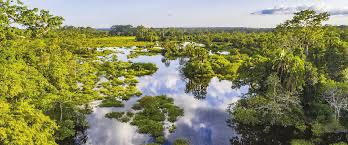
The Central Basin—stretching from Kinshasa to the eastern provinces and covering several major provinces—is known for its exceptional potential. Geological and satellite studies confirm reserves estimated at several billion barrels of oil, along with promising indicators for natural gas. The basin, deep and rich in favorable geological formations, is considered one of Africa’s last major untapped oil provinces.
In conclusion, this announcement marks a turning point for the DRC, which may see its oil sector take off thanks to these new exploration opportunities. As the minister noted, “These efforts are part of the government’s ongoing strategy to harness national petroleum potential and attract investment.” The challenge ahead will be to balance economic development with environmental protection in this sensitive region.
La Rédaction