Voix du Paysan – Informing and Empowering Citizens for Social and Climate Justice
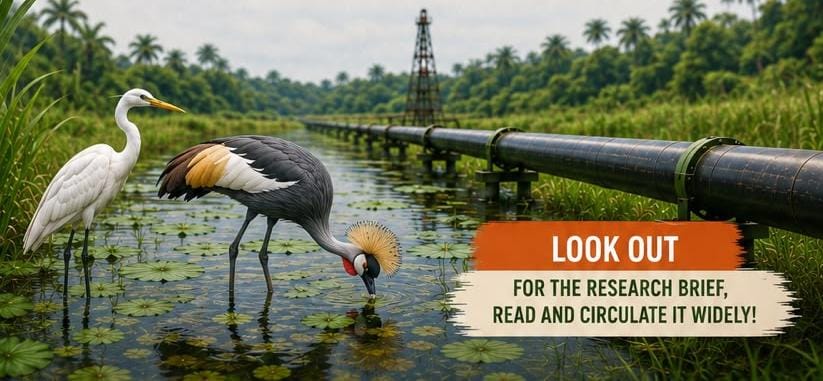
On the occasion of World Nature Conservation Day, the Ugandan organization AFIEGO has chosen to focus attention on an issue that can no longer be ignored: the country’s wetlands—ecosystems that often remain invisible to decision-makers, yet are indispensable to both human well-being and biodiversity. By announcing the release of a research brief documenting the impacts of oil activities on Uganda’s wetlands, the organization underscores that these landscapes are far more than vacant land awaiting industrial development. They are true « organic supermarkets, » providing clean water filtration, carbon storage, flood regulation, food security, and irreplaceable habitats for globally significant biodiversity.
This warning comes at a time when oil development projects, particularly around Lake Albert and along the East African Crude Oil Pipeline (EACOP) corridor, continue to raise serious environmental concerns. Pipelines cut through or border highly sensitive wetlands, increasing the risks of habitat degradation, water contamination, and the disruption of local livelihoods. Even more concerning is the fact that several of these wetlands are hydrologically connected to Lake Albert, which is shared by Uganda and the Democratic Republic of the Congo. Any ecological damage would therefore extend well beyond national borders, making wetland conservation a regional priority rather than a purely domestic issue.
Africa today faces a defining challenge: how to pursue economic development without sacrificing the natural capital upon which its long-term prosperity depends. Framing economic growth and environmental protection as opposing forces is a strategic mistake. Wetlands are not merely ecological assets; they are economic lifelines that sustain fisheries, agriculture, tourism, and climate resilience. Undermining these ecosystems for short-term oil revenues could generate environmental, public health, and social costs that future generations will bear for decades.
AFIEGO’s forthcoming publication is therefore more than an academic contribution. It is a call to place science, evidence, and environmental accountability at the heart of public decision-making. On this World Nature Conservation Day, the message is unmistakable: protecting wetlands is not a luxury reserved for environmentalists—it is an essential investment in safeguarding water resources, biodiversity, food security, and climate stability across the Great Lakes region. Africa’s energy future can only be truly sustainable if it respects the ecosystems that make life itself possible.
Emmanuel Ndimwiza
Editor – Voix du Paysan
« Organic Supermarkets » Under Threat from Oil: Why Uganda’s Wetlands Remind Us That Development Cannot Be Built on Nature’s Ruins